News
iSchool and Federation of Egyptian Industries Sign Digital Skills MoU
August 4, 2026
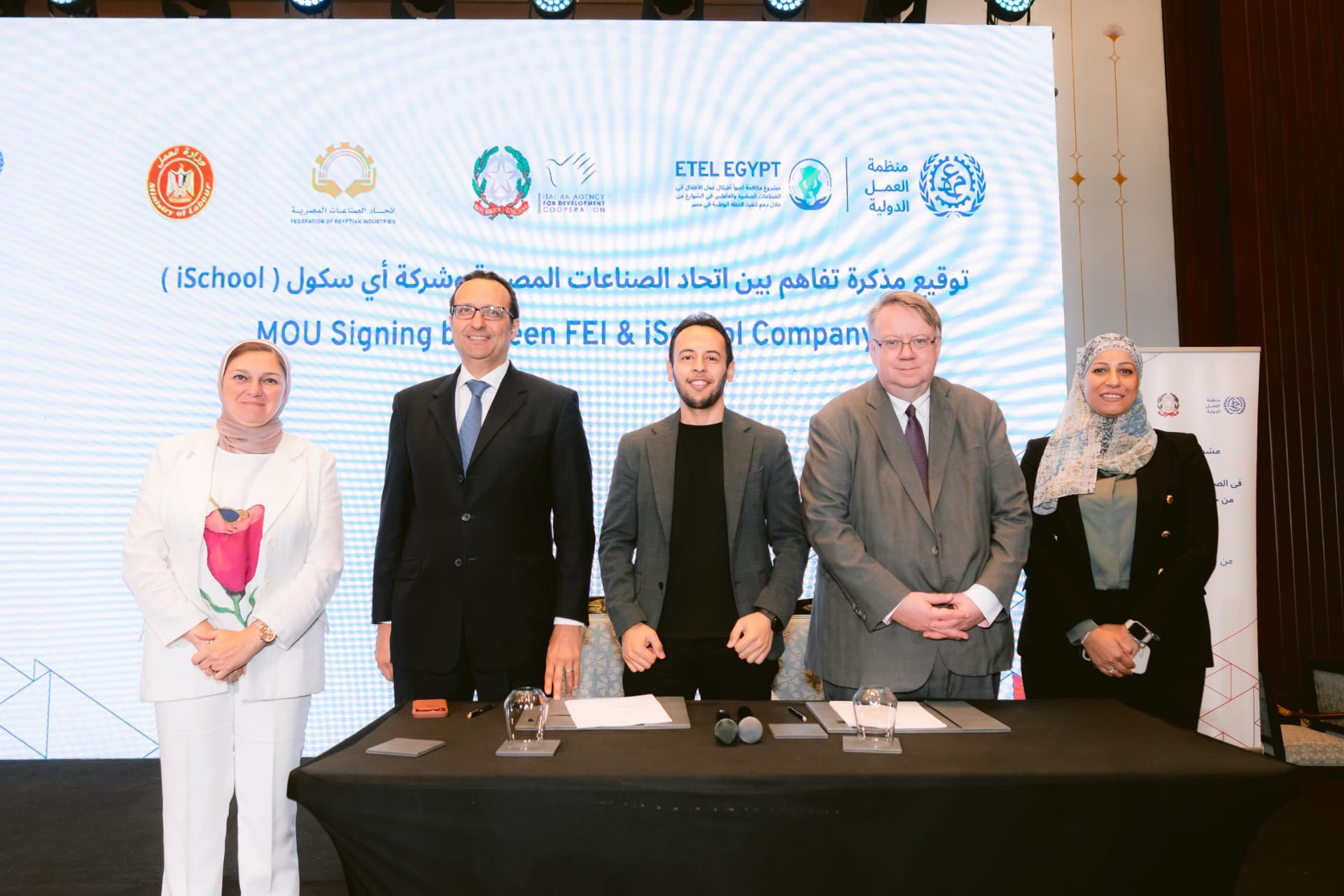
iSchool, the leading K-12 AI and coding education platform in the MENA region, has signed a Memorandum of Understanding with the Federation of Egyptian Industries (FEI) to expand access to digital skills training for children at risk of child labour.
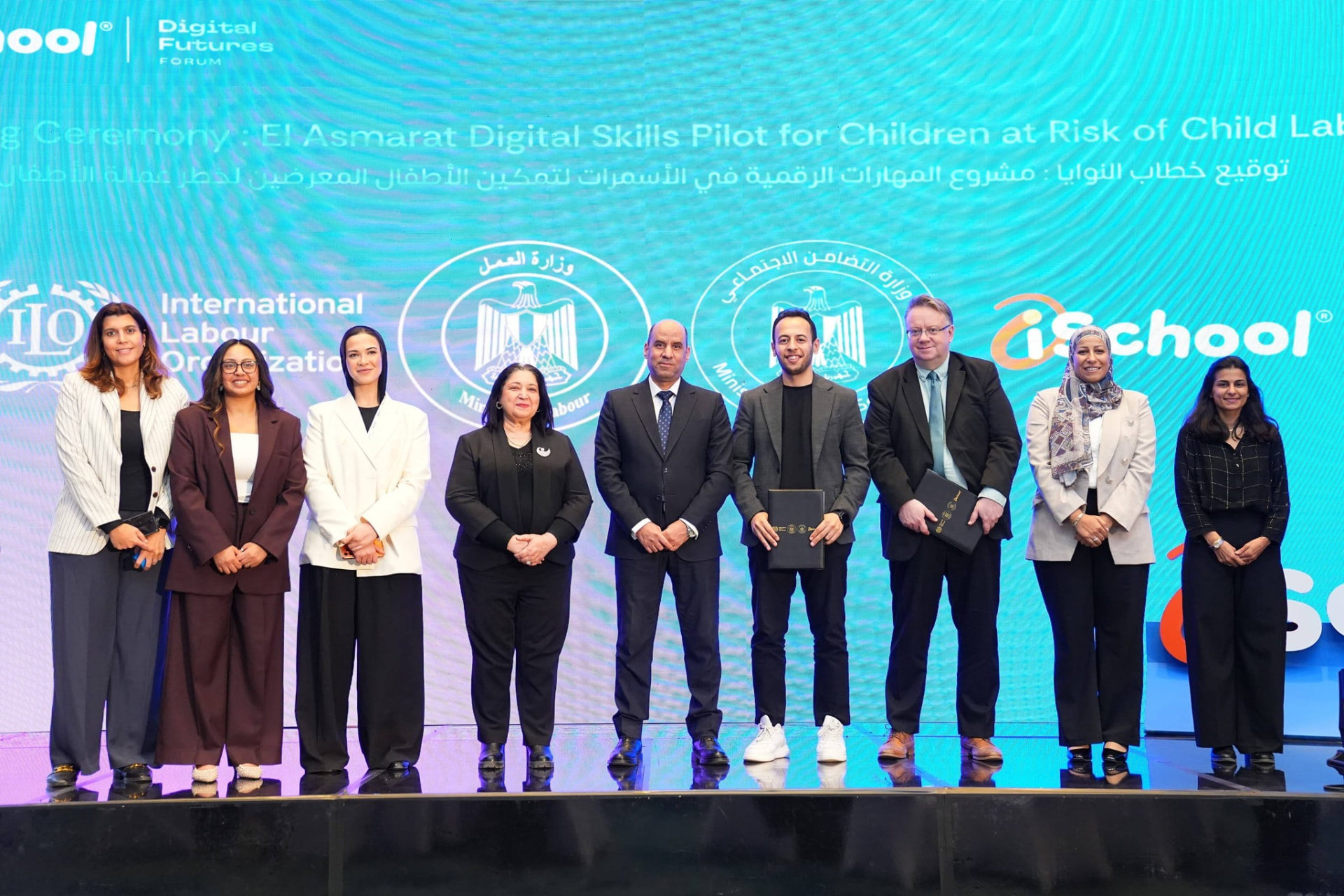
The agreement was signed during the launch event for the Code of Conduct for Regulating Children's Training and Employment, held alongside the graduation ceremony for participants in the national apprenticeship programme.
The partnership falls within the framework of the ETEL Egypt Project, "Combating the Worst Forms of Child Labour in Small Industries and Street Work through Supporting the Implementation of the National Action Plan in Egypt." The project is implemented by the International Labour Organization (ILO) Cairo Office with the support of the Italian Agency for Development Cooperation (AICS).
Under the terms of the MoU, the Federation of Egyptian Industries will support the implementation of iSchool's El Asmarat Digital Skills Pilot for Children at Risk of Child Labour. The initiative is designed to equip vulnerable children with future-ready digital skills, opening pathways to continued learning and long-term employment prospects that do not depend on early entry into the labour market.
Education and skills development are recognised within Egypt's National Action Plan as central to reducing child labour. By delivering structured training in coding and digital literacy to children in El Asmarat, the pilot contributes directly to that national effort, addressing the conditions that lead children into work rather than the symptoms alone.
"Digital skills change what a child believes is available to them," said Muhammad Gawish, Co-founder and CEO of iSchool. "Working alongside the Federation of Egyptian Industries and the ILO allows us to reach children whose circumstances would otherwise put this kind of education out of reach entirely."
The El Asmarat pilot builds on iSchool's experience delivering technology education across more than 20 countries, adapted here for a context where access, continuity, and family circumstances require a different approach to programme design.
iSchool will share updates on the pilot's progress and outcomes as the programme advances.