Coding Articles
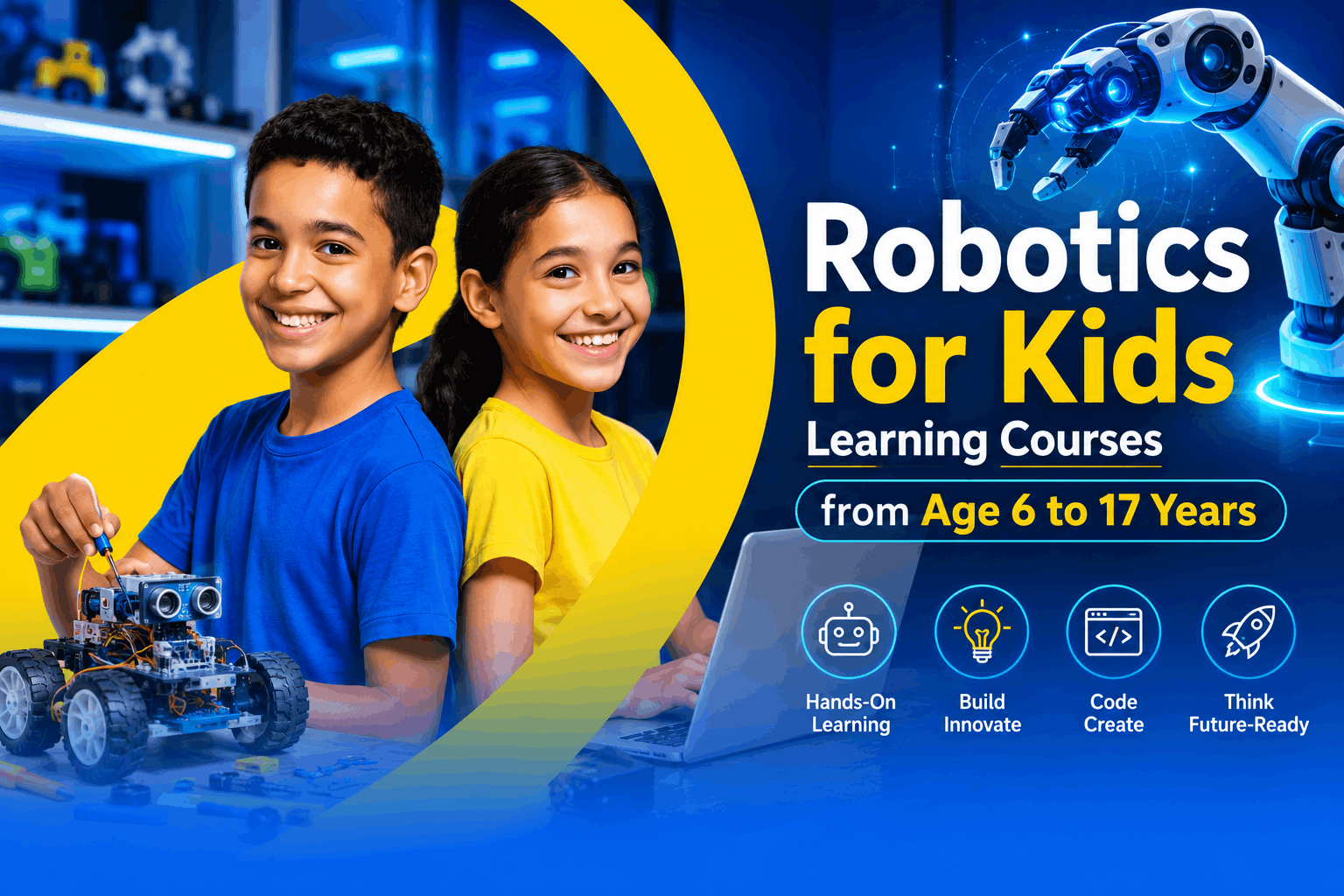
Robotics for Kids Learning Courses from Age 6 to 17 Years
May 22, 2026
Few subjects light up a child's eyes like a robot that moves because they told it to. That spark is why robotics for kids has become one of the fastest-growing areas of education worldwide, and why parents are searching for the right way to start.
The good news: your child no longer needs an expensive lab. With online robotics for kids courses, children aged 6 to 17 can learn to program robots and master the thinking behind them from home. This guide explains what robotics is, what the research shows, the best robots and curricula to look for, and how iSchool, the number one online coding platform for kids, teaches the skills that bring every robot to life.
What Is Robotics for Kids? A Simple Introduction
To explain robotics for kids simply: a robot is a machine that can sense, think, and act. Robotics is the field of designing, building, and programming those machines. Every robot has two halves: the hardware (its body, motors, and sensors) and the software (the code that tells it what to do).
A good introduction to robotics for kids starts with that second half, the code, because it is the brain behind every movement. When a child writes a command and a robot turns, lifts, or avoids an obstacle, an abstract idea becomes something they can see and touch. That is the magic of robot learning for kids: it makes learning physical, immediate, and unforgettable.
Why Robot Learning for Kids Works: The Research
Robotics is not just fun; it is backed by strong evidence. A systematic review and meta-analysis found that educational robots for kids produced a medium positive effect on computational thinking and STEM attitudes. A 2024 multilevel meta-analysis in the International Journal of STEM Education concluded that robot-assisted education clearly improved learning performance and attitudes, and a 2025 review in a Nature journal found robot-based learning enhances reasoning, spatial visualization, and programming competency.
Robotics is especially powerful for younger learners because it gives instant, physical feedback. In one study, pre-kindergarten children showed significant gains in programming skills after just two weeks of robot play. Beyond test scores, robotics builds problem solving, teamwork, and resilience, since debugging a robot teaches children to investigate and try again. It is one of the most effective hands-on ways of developing your child's intelligence and confidence.
From Coding Games to Programming Robots for Kids
The path to robotics runs straight through coding. The same logic a child uses to build a game, loops, conditions, and sequences, is exactly what powers a robot. That is why programming robots for kids begins with the same playful tools as learning games for kids. Children who learn to make a character jump can soon make a programmable robot for kids navigate a maze.
And it all works online. Through live, screen-based e-learning for kids, a child can learn to code in block-based tools and AI platforms, then apply that code to robots and simulations. To learn robotic for kids skills today, you start with the brain, the programming, and the body follows.
Best Programmable and Educational Robots for Kids
If you want a physical robot at home, the best one depends on age. Here is a quick guide to the best programmable robot for kids by stage:
Any of these can be the best robot for kids learning at home, but the robot is only as smart as the code behind it, which is the skill that truly lasts.
What Makes the Best Robot Curriculum for Kids?
A robot toy alone is not a course. The best robot curriculum for kids learning is structured, age-appropriate, and progressive, moving from drag-and-drop blocks to real programming. A strong robot learning curriculum for kids connects coding, electronics, and AI rather than treating them separately, which is why a quality electronic and robotics course for kids blends logic, creativity, and problem solving. When choosing a robot learning website for kids, look for live instruction, accreditation, child safety, and a clear path that grows with your child. This guide to choosing a learning platform for kids by age in Egypt is a helpful place to compare options for electronics and robotics for kids.
iSchool Robotics and Coding Courses for Kids by Age
iSchool teaches the programming, AI, and computational thinking that every robot depends on, delivered as live one-to-one classes in English or Arabic. Its grade-based path means robotics classes for kids always match the right level:
Whether you call them robotics courses for kids, a robotics for kids course, or holiday robotics camp for kids sessions, structured robotics training for kids turns curiosity into real skill, with over 48 professional developer tools in one curriculum.
Robotics Courses for Kids in Egypt and the Middle East
The region is ideal for this. With a median age of around 22, the Middle East has one of the youngest populations on earth, and demand is surging: MENA EdTech funding jumped 169 percent in early 2025, with a clear focus on STEM, coding, and robotics across Egypt, Saudi Arabia, and the UAE. Families searching for robotics course for kids Egypt options, or comparing robotics courses in Egypt for kids, increasingly choose online learning. You can explore related educational courses for kids in Cairo. The timing matters: the World Economic Forum projects 170 million new jobs globally by 2030, with programming and AI among the fastest-growing skills.
iSchool: Safe, Accredited, and Proven
Since 2018, iSchool has built 130,000+ alumni, 6,000,000+ hours of learning, and a 4.9 out of 5 rating from 250,000+ happy parents across 20+ countries. Its quality and safety are independently verified by STEM.org, IAIDL, kidSAFE Certified, edtech impact, and Education Alliance Finland 2025. Every student also builds a career-ready portfolio they own and can share with schools.
Start Your Child's Robotics Learning Journey with iSchool Today
Your child already finds robots fascinating. iSchool turns that fascination into real, future-ready skills: coding, AI, and the logic that brings any machine to life. Choose your child's grade, pick a plan, and book a live class with a world-class instructor in English or Arabic.
Frequently Asked Questions
What is robotics for kids?
Robotics for kids is learning to design, build, and program machines that can sense, think, and act. For children it usually starts with the programming side, using simple block coding to make a robot move, before progressing to electronics and real code.
What is the best programmable robot for kids?
It depends on age. Screen-free robots like Botley suit ages 5 to 7, Sphero and Dash work well for ages 6 to 10, and LEGO SPIKE, micro:bit, or Arduino kits suit older kids. The best robot for kids learning is the one matched to their stage, paired with a structured course.
Can kids learn robotics online?
Yes. Online classes teach the programming, AI, and computational thinking that power every robot, using block coding and simulation tools. Children can build robot logic on screen and apply it to a physical kit at home, making robot learning for kids fully accessible from anywhere.
At what age can kids start robotics?
Children can begin as early as age 5 or 6 with screen-free coding robots and visual tools like Scratch. iSchool designs classes for ages 6 to 18, so difficulty always matches the child's stage.
What do robotics classes for kids teach?
Robotics classes for kids teach coding logic, problem solving, electronics basics, and increasingly AI, while building creativity, teamwork, and resilience through hands-on projects.